The following is the full article The Falmouth Enterprise published online on 3/17/26 entitled, “Wendy’s Proposal Stalled After ZBA Fails To Reach Supermajority”.
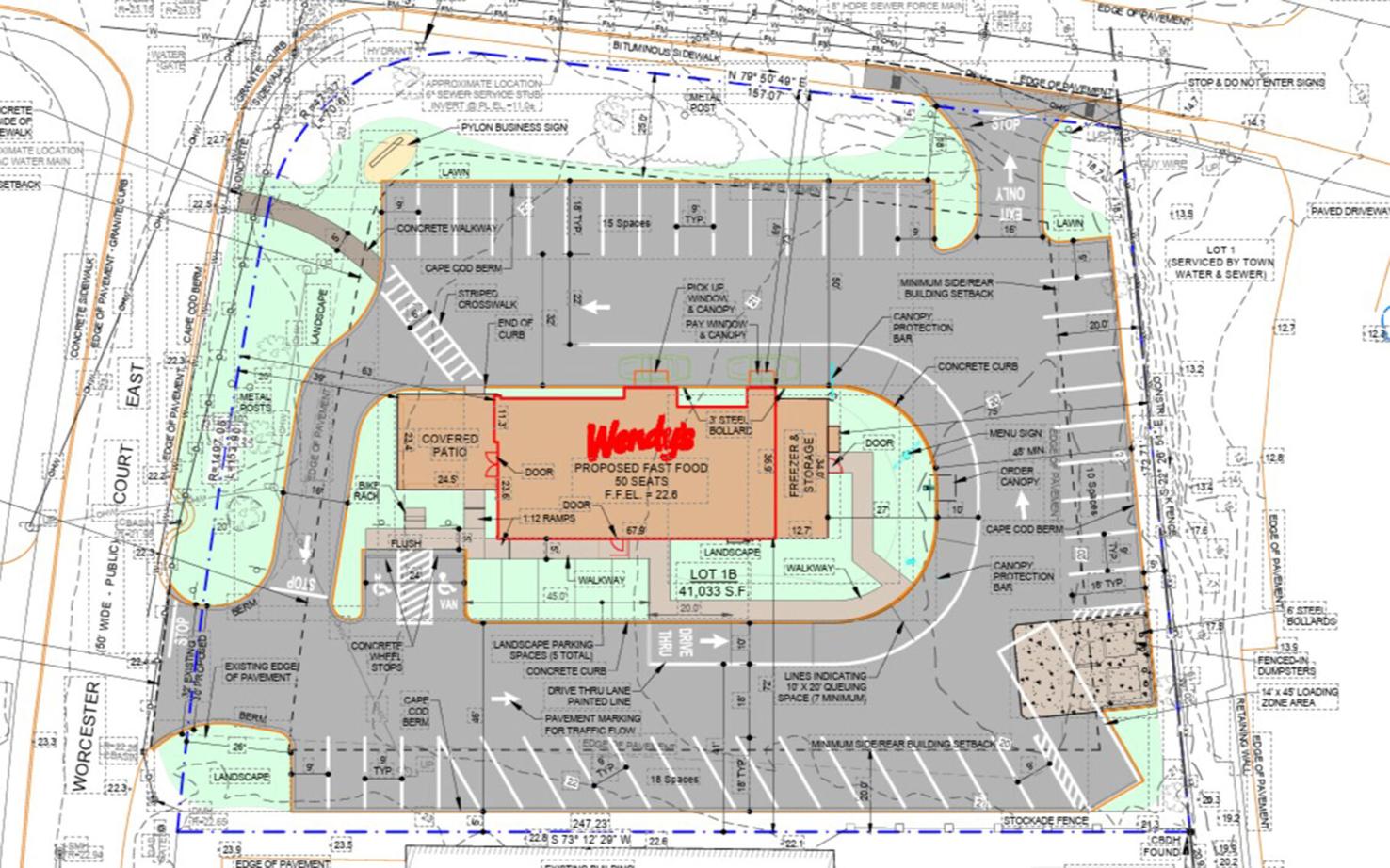
After more than four months of public hearings, engineering peer reviews and extensive discussion on traffic, the Zoning Board of Appeals fell short of the votes needed to approve a proposed Wendy’s fast-food restaurant with a drive-thru at 0 Worcester Court.
On March 12 the board voted 3-2 in favor—but state law requires a supermajority of four affirmative votes for special permits, effectively blocking the project.
The vacant lot at the corner of Worcester Court and Spring Bars Road sits across from Service Credit Union and behind Kappy’s Liquor Store in the center of Falmouth’s B2 business district. Owner Sharon K. Muller said the land has previously been used as a parking lot and a dry cleaner.
Although a majority of the board supported the project, Zoning Administrator Noreen Stockman said, the 3-2 vote did not meet the supermajority threshold. The two members who opposed the permit, Marc P. Finneran and board chairwoman Susanne Murphy, cited ongoing safety and traffic concerns—even though the restaurant is a by-right use of the lot and two professional traffic studies found no major issues.
Associate members Nicholas Haney and Anthony P. Petrucci and regular member D. Scott Peterson voted to approve the permit. Clerk Frank K. Duffy recused himself and vice chairman James Morse was absent.
Murphy and Petrucci also questioned why a 21E environmental site assessment had not been requested by other boards or engineers.
Attorney Robert H. Ament, representing Fashion Foods, LLC, the Wendy’s franchise owner, addressed the board before the final vote. He reviewed concerns raised during the hearings—which began in November—that focused on the intersection of Worcester Court and Spring Bars Road—the site of multiple safety and traffic concerns. Ament said the intersection would be improved at the owner’s expense with flashing stop signs, speed radar signs, and upgraded sidewalks and crosswalks.
Traffic studies also confirmed that sightlines from the property’s driveways and the intersection were adequate.
Ament cited two court cases, including a 2012 Woburn case in which a zoning board’s denial of a project—despite expert traffic evidence—was later ruled improper.
Finneran and Murphy raised traffic concerns repeatedly. “I want to be able to sleep at night,” Murphy said, adding that the studies did not account for potential future housing development at Falmouth Plaza, which could increase traffic further.
Stockman countered that the board had already commissioned two reviews by “highly regarded traffic professionals.” She noted that a 21E study could be made a condition if the project were approved and that potential surrounding development cannot be the basis for denying a project since future projects are speculative.
With the board unable to reach the required supermajority, the path forward includes a few options. Fashion Foods could appeal the decision with the state or make “significant” revision to the plans and bring it before the Planning Board for review. If the planners approved the changed plans, the ZBA hearing process could begin again.