The following is the full article quoted from The Falmouth Enterprise published on 5/8/26, page 7, entitled, “Little Pond Leads The Way As Falmouth Maps Out Nitrogen Reduction Plans”.
Consultant Kristen Rathjen of ScienceWares, Inc., presented an initial overview of the proposed draft watershed management plans to the Water Quality Management Committee on April 29. This marked the first in a series of presentations, discussions and public forums that will take place throughout the year. Rathjen is working with the town’s engineering contractor GHD and Wastewater Superintendent Amy A. Lowell to develop the plans.
In a phone call with the Enterprise, Lowell said the presentation—and feedback from both the public and the committee—will help establish a consistent format for analyzing each of the 14 watersheds and shaping how the individual watershed management plans will be approached.
The watershed management plan is required by the Massachusetts Department of Environmental Protection (MassDEP) to improve water quality in impaired, state-designated nitrogen-sensitive areas. Waters classified as impaired—those with high concentrations of harmful nutrients such as nitrogen and phosphorus—are placed on an integrated waters list, which assigns a total maximum daily load (TMDL) of nitrogen to each watershed.
Nitrogen enters watersheds both naturally and through sources such as septic system seepage, improper fertilizer use, stormwater and road runoff.
A draft of the full plan, covering all 14 watersheds, is expected by the end of the year, Lowell said. The plan will outline the nitrogen-reduction measures the town intends to implement to improve water quality and meet required TMDL thresholds.
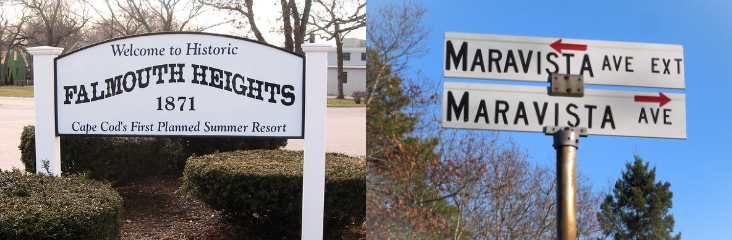
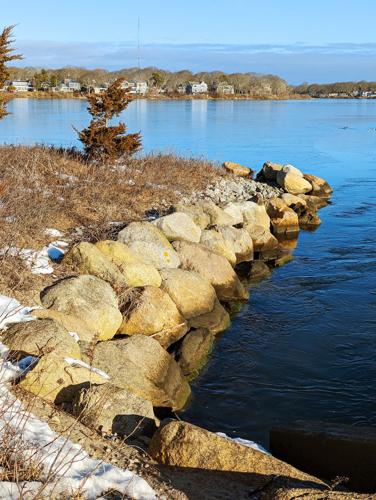
At the meeting, Rathjen presented data on Little Pond, noting it was a strong starting point because the town has already taken significant steps to improve water quality there. These include sewer installation in the Little Pond Sewer Service Area, which connected properties in 2019, as well as oyster aquaculture, installation of innovative and alternative denitrifying septic systems, and reduced fertilizer use.
Progress For Little Pond Watershed
The target set by MassDEP for the Little Pond watershed is a total of 1,956 kilograms (kg) of nitrogen per year. Rathjen said current data shows Little Pond is at 1,492 kg per year, below the maximum threshold. She credited nitrogen reduction efforts such as the fertilizer bylaw, denitrifying septic systems and aquaculture.
The presentation also introduced an initial discussion about potentially requiring denitrifying septic systems for properties located upgradient of freshwater ponds, as a way to limit nutrient concentrations before they enter the watershed.
Resident Matthew E. Handley expressed frustration with the idea of mandating advanced septic systems for upgradient properties. He questioned whether large properties, such as Atria Woodbriar, the assisted living facility on Gifford Street, would be required to upgrade their wastewater infrastructure. Rathjen responded that Atria and the Coonamesset Inn contribute nutrient loads to Falmouth Inner Harbor, not Little Pond. Handley added that input from the Freshwater Ponds Advisory Committee and the Board of Health should be considered if such requirements are pursued.
Lowell said no decisions have been made and agreed that the expertise of both the Board of Health and the Freshwater Ponds Advisory Committee will be incorporated throughout the drafting process. She noted this was the first time the idea had been presented to the Water Quality Management Committee.
Regarding freshwater ponds, Lowell emphasized that each pond is unique and may require a different management approach. She also reiterated that septic system regulations fall under the authority of the Board of Health and that the discussion was exploratory.
Resident Hilda Maingay of the Green Center spoke after the presentation to ask when public input would be considered. She said, “Most of the time, public meetings happen after the plan is already done.” Lowell responded that additional public meetings and future Water Quality Management Committee sessions will provide opportunities for community feedback.
Committee Chairman Stephen D. Rafferty said the committee’s public meetings are an appropriate venue for residents to participate and share input on the watershed management plans. He spoke over Maingay and asked what she wanted to say about the draft; she replied that she had not had enough time to review it and offer thoughtful comments.
Discussion of the Little Pond watershed, along with other watershed management plans, will continue at future Water Quality Management Committee meetings throughout the year.