The following is the full article quoted from The Falmouth Enterprise published on 4/24/26 on page 9 entitled, “Falmouth Beach Management Plan Moves To Approval Stage”.
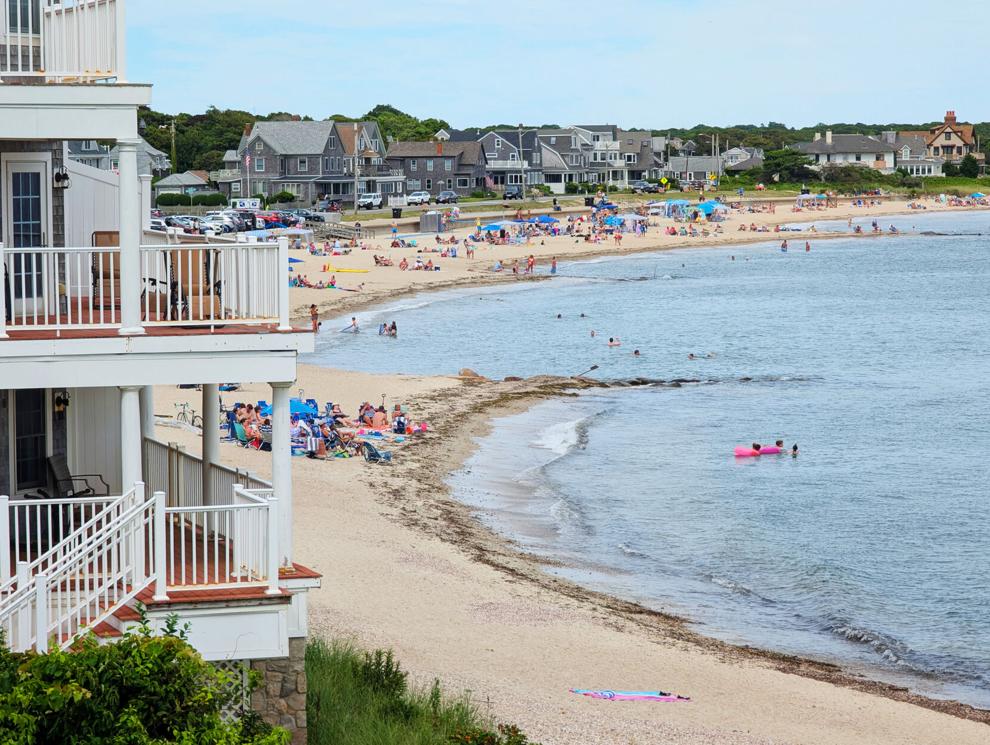 A view of Falmouth Heights Beach from Grand Avenue ENTERPRISE FILE PHOTOGRAPH/GENE M. MARCHAND
The town’s updated Beach Management Plan—which outlines protocols for beach operations, coastal resilience, and infrastructure management, among other recommendations—has entered the approval process with a notice of intent filed to the Conservation Commission last week. The plan marks the first comprehensive update since 2008.
At its April 15 meeting, the commission was unable to approve the plan because it had not yet received a Department of Environmental Protection regulatory file number or reviews from Natural Heritage and the Division of Marine Fisheries regarding horseshoe crabs and time-of-year restrictions. The hearing was continued to May 6.
The updated filing builds on a draft plan presented to the public in January, when town officials, members of the Beach Committee, and residents gathered at a public forum hosted in coordination with consulting firms Urban Harbors Institute (UHI) and Geosyntec. That meeting offered an opportunity for feedback on a document outlining beach operations, coastal resilience strategies, and infrastructure management.
Shannon Hogan of UHI again presented the plan to the commission, noting it was developed in collaboration with Geosyntec, the Beach Department led by Superintendent Maggie Clayton, and the Coastal Resilience Department headed by Joshua K. Wrigley.
The plan covers Megansett, Old Silver (both sides and parking lots), Chapoquoit, Wood Neck, Surf Drive, Falmouth Heights, Bristol and both the east and west sides of Menauhant. Proposed management activities include dune restoration; parking area upgrades and maintenance; vegetation management; repairing and maintaining signage; and installing lifeguard chairs, fencing, and corrosion-resistant handrails. Hogan said each beach has different needs depending on location and use.
Echoing her earlier presentation, Hogan emphasized that Falmouth beaches are “dynamic,” with sand constantly shifting due to wind and waves, leading to ongoing erosion and accretion. In January, she detailed shoreline trends across town beaches, including erosion rates of one to two feet per year at Old Silver Beach and roughly two feet per year along unprotected sections of Chapoquoit, while Surf Drive has experienced accretion of about 2.5 feet per year due largely to nourishment efforts.
She also reiterated operational protocols for pre-season, in-season, and post-season maintenance, including recommendations for lifeguard staffing, dune restoration, beach nourishment, and management of facilities and signage.
Public feedback gathered earlier this year highlighted a range of priorities and concerns. Members of the Beach Committee pushed for the plan to function more as a practical “user manual” for town officials, with clearly prioritized recommendations and streamlined organization. They also urged a stronger emphasis on the role beaches play in protecting infrastructure and private property.
Residents raised additional issues, including a desire to limit overdevelopment and maintain a minimalistic beach experience, as well as concern over sand accretion at Megansett Beach and the potential for dredging to support nourishment efforts.
The draft plan includes 33 recommendations spanning coastal resilience, storm preparedness, and beach operations. Among them are continued dune restoration, improved storm response planning, enhanced interdepartmental coordination, and efforts to address stormwater runoff from parking areas. It also calls for reviewing the plan every five years, though Hogan told the commission last week that more frequent check-ins—every one to two years—are recommended.
While the plan addresses routine maintenance, larger-scale projects—such as sand movement, parking lot stormwater management, or dune plantings—will require coordination with the commission and may need additional permitting.
Following Hogan’s presentation, Conservation Commission Administrator Jennifer Lincoln said she would like more information on dune buildup and the potential planting of beach grass, particularly in light of rare plants along Surf Drive.
Commissioner Daniel Walsh asked how long the updated plan is expected to remain in effect, noting the previous plan lasted 18 years. Hogan said the new plan recommends regular review and periodic updates to avoid that kind of gap.
A draft of the plan remains available on the town’s website.